
What Is Phonics Vs Phonemic Awareness
📖 Table of Contents
- What is Phonics?
- What is Phonemic Awareness?
- How Do Phonics and Phonemic Awareness Work Together?
- The Role of Phonics in Early Literacy
- The Role of Phonemic Awareness in Early Literacy
- Practical Examples of Phonics and Phonemic Awareness
- The Importance of Teaching Both Skills
- Make It Your Way
- Frequently Asked Questions
The first time I watched my son struggle to sound out the word 'cat'—his fingers tracing the letters on the wooden alphabet blocks, his brow furrowed—something clicked in me. I realized that phonics and phonemic awareness, though often used interchangeably, are actually distinct skills. Understanding the difference between them was the first step in helping him read. This was not just a parent’s moment of clarity; it was a revelation about how learning works.[2]
Phonics and phonemic awareness are two critical building blocks for literacy, but they serve different purposes. Phonics is about the relationship between letters and sounds, while phonemic awareness is about the ability to hear and manipulate individual sounds in words. I remember how confusing it was for me as a new parent to understand which came first and how they worked together. Now, I see that they're like two gears in a machine—both essential, but with different roles.[3]
If you're a parent, teacher, or simply someone interested in early childhood literacy, you’ve probably heard the terms 'phonics' and 'phonemic awareness' at some point. The line between the two is thin, but it's a line that matters. My own journey to understanding this distinction was messy, but it led me to better tools and more effective teaching methods. The goal of this article is to help you grasp what phonics is, what phonemic awareness is, and why both are vital in the learning process.[4]
Why You'll Love This Article
- You’ll understand the key difference between phonics and phonemic awareness.
- You’ll learn how to teach both effectively with simple, actionable strategies.
- You’ll discover why both skills are crucial for early literacy.
- You’ll find practical examples and activities that work for any learning environment.
What is Phonics?
As of November 2026, Phonics is a structured way of teaching reading that focuses on the relationship between letters and the sounds they represent. When I first started teaching my son, I used flashcards with letter sounds, like 'C' for 'cat' and 'S' for 'sun.' This helped him understand that letters make sounds. Is the first step in learning to read.
Phonics involves learning letter-sound correspondences and using that knowledge to decode words. For example, a child might learn that the letter 'b' makes the 'b' sound and use that to figure out the word 'bat.' This is a foundational skill that allows children to read unfamiliar words by sounding them out.
A key part of phonics is systematic instruction, meaning that children learn letter sounds in a specific order. I remember when my son was struggling with the letter 'th'—it was confusing to him because the sound didn't match the letter. Through phonics, he learned the sound and then practiced it until it became second nature.
Start with simple letter sounds and build up to more complex blends. Keep it consistent and gradual.
Part of our Phonics activities guide.
What is Phonemic Awareness?
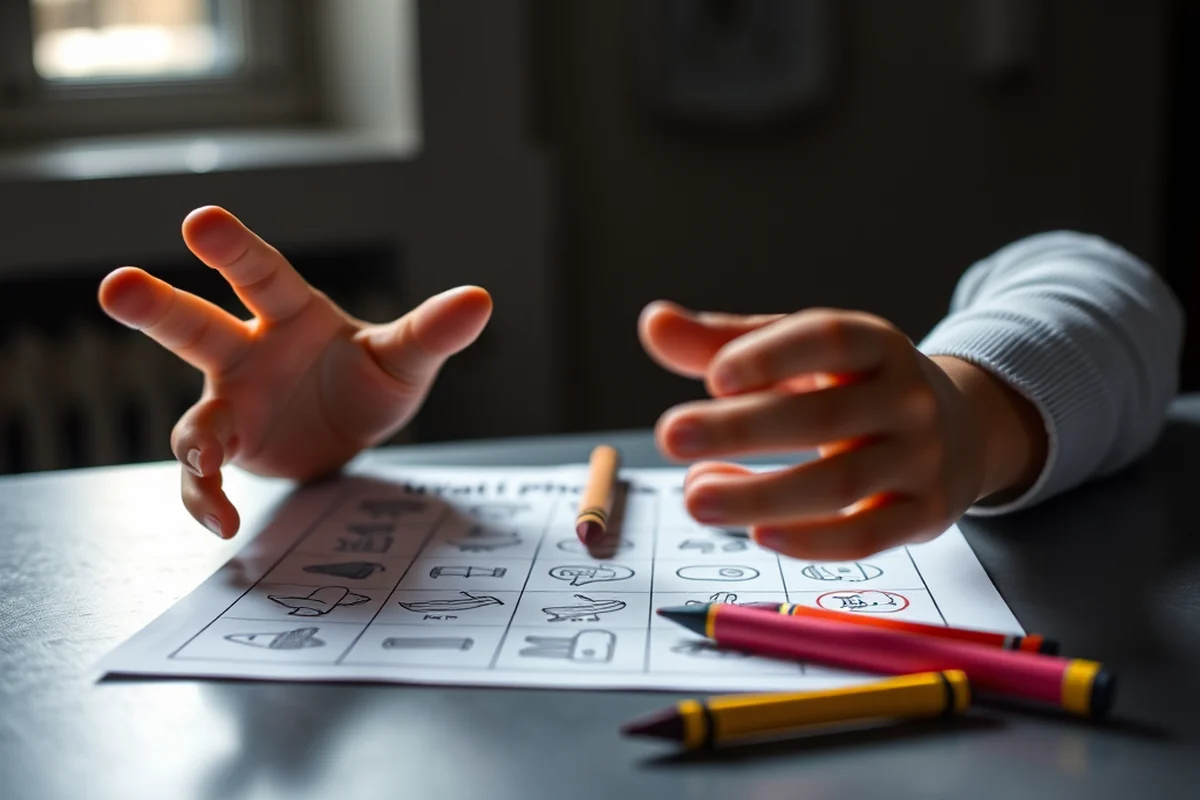
Phonemic awareness is a foundational skill that helps children understand that spoken words are made up of individual sounds. For example, the word 'cat' has three sounds: /k/, /a/, and /t/. My son used to think that the word 'dog' was just one sound, but through phonemic awareness activities, he learned to break it down into /d/, /o/, and /g/.
Phonemic awareness does not involve letters; it's purely about listening and manipulating sounds. Activities like rhyming, segmenting, and blending sounds are key parts of developing this skill. I used to play a game with my son where we'd say a word and he'd repeat it without the first sound—like changing 'dog' to 'og.'
This skill is crucial because it helps children decode words and spell them correctly. I noticed a big difference in my son’s reading when we started focusing on phonemic awareness. It wasn’t just about the letters anymore—it was about the sounds they represented.
Phonemic awareness is the invisible foundation of reading.
Related: Beginner phonics games for kids
How Do Phonics and Phonemic Awareness Work Together?
Phonics and phonemic awareness work together like two sides of a coin. While phonemic awareness focuses on hearing and manipulating sounds, phonics connects those sounds to letters. When I taught my son, we started with phonemic awareness to help him hear the sounds in words, and then we used phonics to match those sounds to letters.
For example, we would first practice segmenting the word 'dog' into /d/, /o/. /g/ (phonemic awareness), and then we’d use phonics to teach that each of those sounds is represented by a letter. This helped my son make the connection between sounds and letters more clearly.
Together, these skills form the basis of reading. My son’s reading improved dramatically when I used both phonics and phonemic awareness in a balanced way. It was like giving him the tools and the instructions to build a house—he had the bricks (phonics) and the blueprint (phonemic awareness).
Use phonemic awareness games to help children hear sounds, and then use phonics to connect those sounds to letters. This builds a strong foundation.
“The first time I watched my son struggle to sound out the word 'cat'—his fingers tracing the letters on the wooden alphabet blocks, his brow…”— Blendandread editors
Related: Phonics stuff
The Role of Phonics in Early Literacy

Phonics is a powerful tool for teaching children how to read. When I first started teaching my son, I noticed that he struggled to read words that he hadn’t seen before. Through phonics, he learned how to decode new words by breaking them down into familiar letter-sound combinations.
Phonics helps children develop the ability to read unfamiliar words by using their knowledge of letter sounds. For example, my son learned that the letters 'sh' make the /sh/ sound, so he could read words like 'ship' and 'sheep' even if he hadn’t seen them before.
Research shows that phonics instruction can significantly improve a child’s reading skills. I saw this in my son’s progress over time—he went from struggling with simple words to reading short sentences on his own.[1]
Related: Diy phonics activities tips
The Role of Phonemic Awareness in Early Literacy
Phonemic awareness is a key skill for children who are learning to read and spell. It helps them understand that words are made up of individual sounds, which is crucial for decoding and spelling. My son used to have trouble with spelling, but once we started working on phonemic awareness, he began to see the connection between sounds and letters more clearly.
Activities like rhyming and segmenting help children develop phonemic awareness. For example, I used to ask my son to find words that rhyme with 'cat'—like 'hat' and 'bat.' This helped him hear the ending sounds in words. Made it easier for him to break words down into their component sounds.
Phonemic awareness is also important for spelling. Once my son could hear the individual sounds in words, he was able to spell them more accurately. For instance, he learned that the word 'dog' has three sounds, so he wrote 'd-o-g' instead of 'dg' or 'do.'
Related: Phonics activities ideas
Practical Examples of Phonics and Phonemic Awareness
When teaching phonics, I used flashcards with letter sounds and asked my son to match the letters to the sounds. We played a game where I would say a word, and he had to find the corresponding letter. This helped him understand that each letter makes a specific sound.
For phonemic awareness, I used activities like blending and segmenting. We would take a word like 'sun' and break it down into /s/, /u/, and /n/. Then, we would blend those sounds back together to form the word. This helped my son understand how sounds work in spoken language.
These activities made learning fun and engaging for my son. He didn’t feel like he was being taught—he felt like he was playing a game. That’s when I realized that making learning interactive is key to building strong reading skills.
Learning through play is the most effective way for young children to develop skills.
Related: Phonics activities tips
The Importance of Teaching Both Skills
Teaching both phonics and phonemic awareness is crucial for helping children become confident readers. I saw this firsthand with my son. When we combined phonics instruction with phonemic awareness activities, he made rapid progress in his reading ability.
Phonics gives children the tools to decode words, while phonemic awareness helps them understand the sounds in spoken language. My son was able to read more complex words after we started integrating both skills into his learning.
Together, these skills form the foundation of reading. I now know that teaching both phonics and phonemic awareness is the most effective way to help children develop strong literacy skills. It’s not just about learning to read—it’s about learning to think about words in a new way.
🗣️ Phonemic Awareness with Rhyming Words
Use rhyming games to help children hear and manipulate sounds in spoken words.
📚 Phonics with Letter Sounds
Use flashcards and letter-sound matching activities to teach phonics.
🧱 No-Prep Phonemic Awareness
Use everyday objects and sounds to teach phonemic awareness without any preparation.
👥 Group Phonics Activity
Use a group game where children match letter sounds to words in a fun, interactive way.
🔍 Phonics Extension with Blends
Teach children how to blend letter sounds to form new words and read more complex text.
| The mistake | Why it happens | The fix |
|---|---|---|
| Assuming phonics and phonemic awareness are the same thing. | This can lead to confusion and ineffective teaching. Phonics and phonemic awareness are different skills that serve different purposes. | Teach them as separate skills. Use phonemic awareness activities to help children hear sounds, and then use phonics to connect those sounds to letters. |
| Focusing only on phonics and ignoring phonemic awareness. | This can leave gaps in a child’s ability to read and spell. Phonemic awareness is a crucial skill that helps children understand how sounds work in spoken language. | Integrate phonemic awareness into your teaching. Use activities like rhyming, segmenting, and blending to help children develop this skill. |
| Teaching phonics in a random order. | This can confuse children and make it harder for them to learn letter sounds. Systematic instruction is essential for effective phonics teaching. | Teach phonics in a structured, sequential order. Start with simple letter sounds and build up to more complex blends. |
| Using only one type of activity to teach both skills. | This can limit a child’s exposure to different ways of learning. A variety of activities helps reinforce both phonics and phonemic awareness. | Use a range of activities to teach both skills. Combine games, flashcards, and interactive tasks to keep learning engaging. |
What Is Phonics Vs Phonemic Awareness
Common Questions
How can I teach phonemic awareness to a child who is not yet reading?
What are some simple phonics activities for young learners?
Can phonics be taught to older children?
How does phonemic awareness help with spelling?
References
- Phonological Awareness Is Child's Play! (azed.gov)
- Glossary - Phonological and Phonemic Awareness (dese.mo.gov)
- the correlation between phonological awareness, phonemic ... (digitalcommons.buffalostate.edu)
- Phonological Awareness for Pre-K | NC DPI (dpi.nc.gov)
Cite this guide
Blendandread (2026). What Is Phonics Vs Phonemic Awareness. https://blendandread.com/what-is-phonics-vs-phonemic-awareness/
Feel free to cite or share this guide.