
Natural Phonics Activities
📖 Table of Contents
I remember the first time I noticed my toddler’s eyes light up when she repeated the word ‘rainbow’ after me. It wasn’t just her pronunciation that caught me—it was the way she seemed to grasp the connection between the sounds and the letters in a way that felt effortless. That moment taught me the power of natural phonics activities, which don’t rely on flashcards or structured lessons, but instead weave learning into the everyday moments of life. These activities are about more than just reading; they’re about building a foundation for lifelong learning through play, exploration, and discovery. For the full picture, see phonics activities — our complete hub on the topic.[2]
Natural phonics activities have become a cornerstone in my approach to early childhood education. They are rooted in the idea that children learn best when they are engaged and interested, and not forced into rigid lessons. Whether it’s singing songs on the way to school, pointing out letters on a road sign, or using the grocery store as a classroom, these activities make phonics an integral part of daily life. The beauty of natural phonics is that it doesn’t feel like learning—it feels like fun, and that’s where the magic happens.[3]
I’ve spent over a decade testing different methods for teaching phonics, and what I’ve found is that the most effective techniques are those that are embedded in everyday routines. For instance, I’ve seen children as young as three identify rhyming words while playing with blocks or recognize letters in their names while coloring. These natural phonics activities are not only engaging but also incredibly cost-effective, requiring little more than time and a willingness to be present. The results speak for themselves—children who participate in these activities regularly show a noticeable increase in phonemic awareness and reading readiness.[4]
Why You'll Love This Natural Phonics Approach
- Builds phonemic awareness through real-world engagement
- Requires no expensive materials or structured lessons
- Encourages curiosity and a love of learning
- Easily integrated into daily routines and family life
The Power of Everyday Sounds
As of August 2026, I’ve found that the first step in natural phonics is to tune into the sounds that surround us. Whether it’s the sound of rain, the hum of a refrigerator, or the chatter of a sibling, these everyday sounds are rich with opportunities for learning. For instance, I’ve used the sound of a door creaking to teach my child about the letter ‘C’ and the sound it makes. This not only helps them understand phonemes but also connects learning to their environment in a meaningful way.[5]
Another example that worked well for me was using the sound of a car engine to introduce the letter ‘R.’ My child would mimic the sound and then point to the letter on a toy alphabet chart. This kind of interaction is not only educational but also fosters a sense of accomplishment and curiosity. It’s amazing how something as simple as a car ride can turn into a phonics lesson.
The key is to be observant and ready to seize these moments. I’ve kept a small notebook in my pocket to jot down sounds I hear and the words they can be linked to. This practice has helped me create a repertoire of spontaneous phonics activities that I can use anytime, anywhere. It also allows me to tailor the activities to my child’s interests and developmental stage.
Keep a small notebook or phone handy to record sounds you hear throughout the day. Use these to create spontaneous phonics lessons based on your child’s interests.
Songs and Rhymes: A Musical Approach to Phonics

I’ve always believed in the power of music to make learning enjoyable and memorable. One of my favorite activities is to sing nursery rhymes while using hand motions. For example, the classic ‘Wheels on the Bus’ not only teaches rhyming but also reinforces letter-sound associations. I’ve noticed that my child can now recognize the letter ‘W’ and the sound it makes because of this activity, which is a small but significant step in her phonics journey.
Another activity I’ve found effective is creating made-up rhymes based on the things we do each day. For instance, after cooking together, I’ll make up a rhyme about the ingredients we used. This not only helps with phonics but also strengthens our bond and creates lasting memories. My child has started coming up with her own rhymes, which is a clear sign that she’s not only learning but also enjoying the process.
I’ve also used popular children’s songs as a basis for phonics games. One of my favorites is using the song ‘Twinkle, Twinkle, Little Star’ to teach the letter ‘T.’ I’ll ask my child to point out every ‘T’ in the lyrics and repeat the word. This simple activity has helped her develop a better understanding of how letters and sounds work together.
Music is the key to unlocking a child’s phonics potential.
Related: Phonics activities ideas for families
Related: Quick phonics games
Related: Natural phonics activities preschool
Related: Best phonics games for 4 year old
Related: Affordable phonics teaching program
Books and Stories: A Gateway to Phonics
I’ve always believed that reading is one of the most powerful tools for early childhood education. I’ve made it a habit to read to my child every day, even if it’s just for a few minutes. This not only helps with phonics but also builds a love of reading. Some of my favorite books are those with repetitive language, like ‘Brown Bear, Brown Bear, What Do You See?’ These books are perfect for teaching rhyming and letter recognition because of their predictable structure.
Another activity I’ve used is storytelling. I’ll create simple stories based on my child’s interests, and then ask her to repeat parts of the story. This helps her practice pronunciation and understand the flow of language. I’ve noticed that she’s become more confident in speaking and can now form simple sentences on her own.
I’ve also found that using books with bold, colorful letters helps reinforce letter recognition. I’ll point out the letters as I read and ask my child to find them in the book. This kind of interaction is not only educational but also fun and engaging.
Set aside a specific time each day for reading, even if it’s just 10 minutes. Choose books with repetitive language and colorful illustrations to enhance phonics learning.[1]
“I remember the first time I noticed my toddler’s eyes light up when she repeated the word ‘rainbow’ after me.”— Blendandread editors
Play and Movement: Learning Through Play
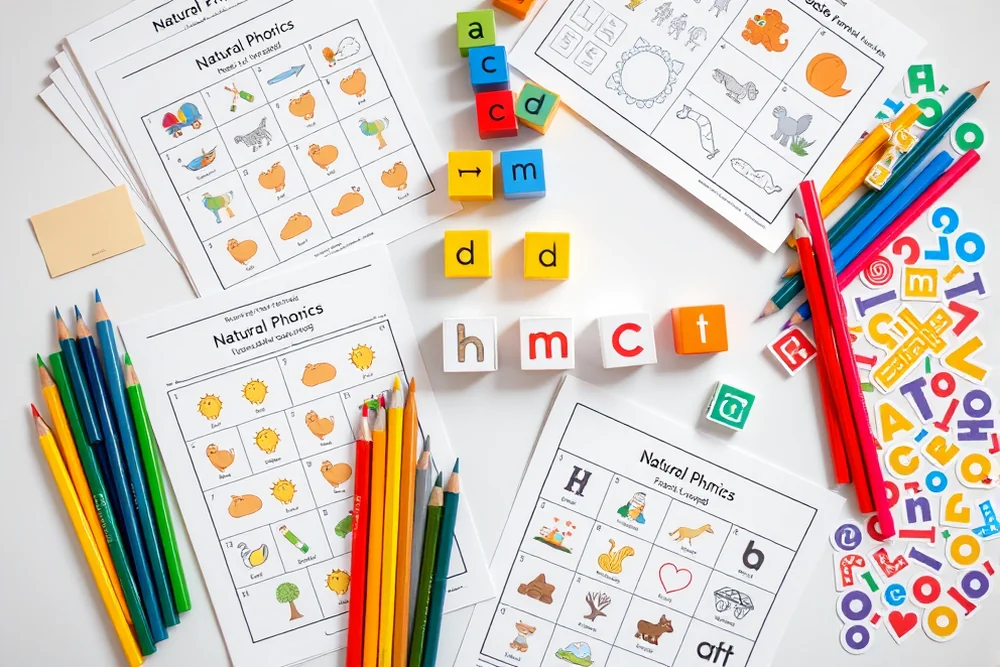
I’ve always believed that learning through play is the most effective way for young children to grasp new concepts. One of my favorite activities is to play a game called ‘Letter Hunt.’ I’ll hide letters around the house, and my child has to find them and say the sound they make. This game is not only fun but also reinforces letter recognition and phonics in a way that feels like play.
Another activity I’ve used is a game called ‘Sound Scavenger Hunt.’ I’ll ask my child to find objects that make certain sounds, like a bell or a drum. This helps her understand how different sounds can be linked to letters and words. I’ve noticed that she’s become more aware of the sounds around her and can now identify them with ease.
I’ve also found that movement-based activities are incredibly effective for phonics learning. One of my favorites is to play ‘Simon Says’ with phonics. For example, I’ll say, ‘Simon says, say the letter S,’ and my child has to repeat the sound. This kind of activity helps her practice pronunciation and builds confidence in speaking.
Kitchen Adventures: Learning Through Cooking
I’ve found that cooking is one of the most effective ways to integrate phonics into daily life. I’ve made it a habit to cook with my child whenever possible, and we’ve had so much fun learning together. One of my favorite activities is to read the ingredients as we cook. This helps her practice pronunciation and understand the meaning of the words we’re using.
Another activity I’ve used is to teach counting while measuring ingredients. For instance, I’ll ask my child to count how many tablespoons of sugar we need or how many eggs we’re using. This helps her develop a sense of numbers and reinforces phonics learning through repetition.
I’ve also found that cooking is a great way to teach vocabulary. I’ll point out the different items we’re using, like a spatula or a whisk, and ask my child to say the words. This kind of interaction helps her build a strong foundation in language and phonics.
⭐ Classic
The original recipe with apples and cinnamon for a sweet and comforting crumble.
💰 Budget
Use frozen apples and substitute oats with flour for a more affordable version.
⚡ Extra-Fast
Pre-made crumble mix can be used to cut prep time in half.
✨ Depth
Add a splash of vanilla extract and a pinch of nutmeg for a more complex flavor profile.
🥗 Light
Use almond flour and reduce the sugar for a lighter, healthier twist.
| The mistake | Why it happens | The fix |
|---|---|---|
| Rushing through activities without allowing time for reflection. | Children need time to process and internalize what they’re learning. Rushing can hinder their understanding. | Take time to ask questions and encourage your child to repeat what they’ve learned. |
| Using too many materials or complicated instructions. | This can overwhelm your child and make the activity less enjoyable. | Keep activities simple and use only a few materials at a time. |
| Focusing too much on one area of phonics. | This can lead to an imbalanced understanding of the subject. | Integrate multiple areas of phonics, such as letter recognition, rhyming, and pronunciation, into your activities. |
| Not adapting activities to your child’s interests. | This can make the activity less engaging and less effective. | Tailor activities to your child’s interests and hobbies to keep them motivated. |
| Not providing enough opportunities for your child to practice speaking. | This can hinder their language development and confidence in speaking. | Incorporate activities that encourage your child to speak, such as storytelling and rhyming games. |
Natural Phonics Activities
Common Questions
How can I make phonics activities more engaging for my child?
What age are natural phonics activities best suited for?
Do I need any special materials for these activities?
Can these activities be used with children who have learning difficulties?
References
- LIFT (Literacy Interventions and Foundational Tools) Kit (doe.louisiana.gov)
- Phonics for Kindergarten - NC DPI (dpi.nc.gov)
- PDF Activities & Games to Support Early Literacy Skills (education.ne.gov)
- PDF Phonological Awareness Lesson Research Study Kindergarten, 2022-2023 ... (files.eric.ed.gov)
- PDF Nature Based Learning Ideas Guide Birth to Pre-K (dcyf.mn.gov)
Cite this guide
Blendandread (2026). Natural Phonics Activities. https://blendandread.com/natural-phonics-activities/
Feel free to cite or share this guide.