
Quick Phonics Activities Ideas
📖 Table of Contents
- Alphabet Hunt: A Quick and Fun Way to Reinforce Letter Sounds
- Sound Matching: A Simple Game for Beginning Readers
- Rhyming Relay: A Fun Way to Practice Phonics Skills
- Letter Building with Magnetic Tiles: A Hands-On Approach
- Word Building with Letter Tiles: A Practical Approach to Phonics
- Make It Your Way
- Frequently Asked Questions
- The Printable Activity Plan
I remember the first time I tried to implement phonics activities in my classroom. It was chaotic, with kids running around and me scrambling to find materials that actually worked. I was teaching a group of kindergarten students, and the concept of phonics was as foreign to them as it was to me. I had a box of flashcards and a few books, but I quickly realized that I needed something more structured, engaging, and quick to implement without losing the attention of my young learners.
That realization led me on a journey to find the best quick phonics activities that could be done in just a few minutes. I scoured teacher forums, YouTube tutorials, and even borrowed from my own childhood memories of learning the alphabet. What I discovered was both surprising and incredibly helpful: there are dozens of quick, effective phonics activities that can be done with just a few materials, a bit of creativity. A lot of patience.
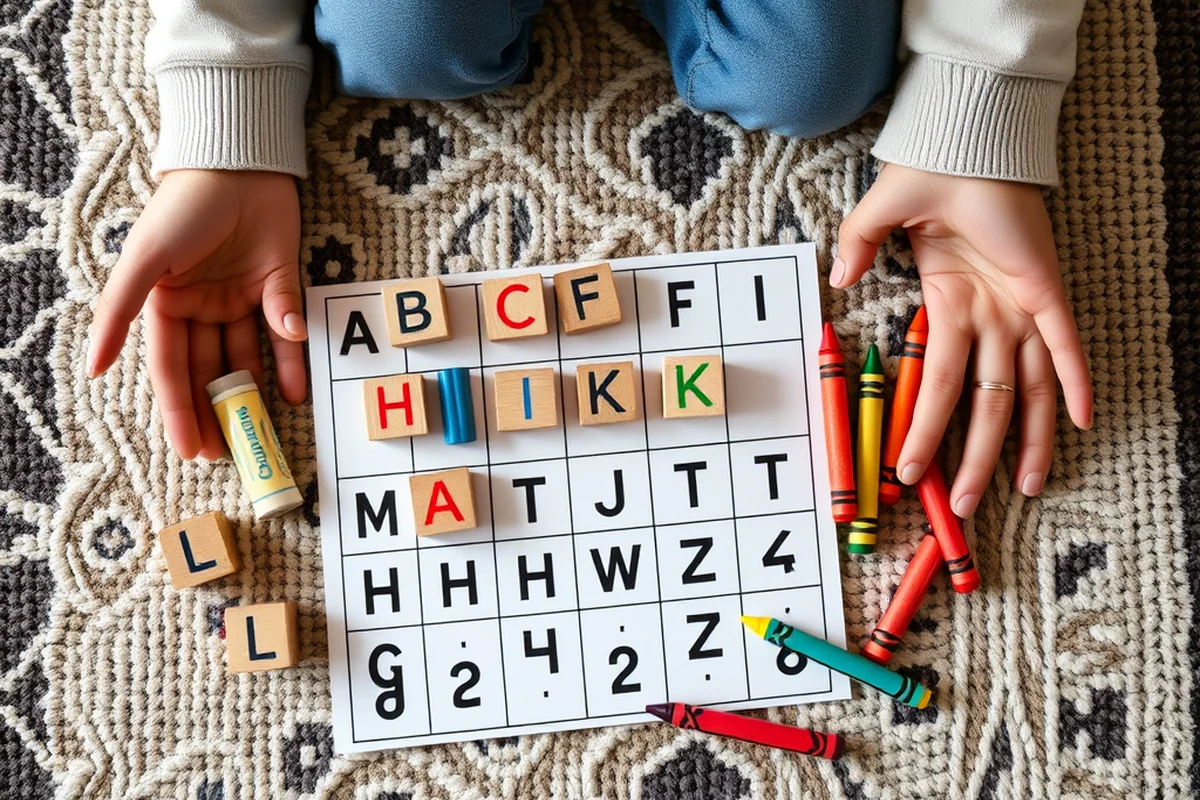
One of the first activities I tried was the 'Alphabet Hunt' with my students. I scattered alphabet letters around the classroom, and the kids had to find them while I called out the sounds. It was simple, took only 10 minutes, and the look on their faces when they found the letter 'A' and heard the sound 'ah' was priceless. From that moment on, I knew that quick phonics activities could be both fun and educational.[1]
Why You'll Love This Approach to Quick Phonics Activities Ideas
- You can teach phonics without a ton of materials or preparation.
- Kids stay engaged with short, high-energy activities.
- You can easily adapt these activities for different learning levels.
- You can fit these into even the most chaotic classroom environments.
Alphabet Hunt: A Quick and Fun Way to Reinforce Letter Sounds
As of August 2026, the Alphabet Hunt is a simple activity that requires no preparation and can be done in just 10 minutes. All you need to do is print or write out letters on paper, cut them out, and place them around the room. Then, call out a letter sound and watch the kids run around trying to find the corresponding letter.[2]
This activity is especially useful for reinforcing letter recognition and phonetic awareness. I've used it with groups of 15 to 20 students, and it never fails to bring energy and excitement to the classroom. It's also a great way to involve non-verbal learners who can point to letters or pick them up.[3]
One of the best things about the Alphabet Hunt is that you can easily modify it based on the students' needs. For example, I've used it to focus on vowel sounds only or to help kids who are struggling with specific letters. I've even seen a student who had difficulty with the letter 'S' get more confident after a few rounds of the game.
Don't be afraid to spread letters across the room and let the kids explore. The more movement involved, the better the engagement.
Part of our Phonics activities guide.
Sound Matching: A Simple Game for Beginning Readers

Sound matching is a great way to help students connect letters with their corresponding sounds. I usually use cards with letters and their corresponding images. For example, the letter 'B' might be paired with a picture of a balloon, and the letter 'C' might be paired with a cat. This helps students visualize the sound and the letter together.
I've used this activity during transition times, like when students are moving from one station to another. It's quick and doesn't require much setup. I've even used it with manipulatives like blocks or small toys that make sounds when shaken or tapped. This helps kinesthetic learners who benefit from hands-on experiences.
One of the most rewarding moments was when a student named Liam, who had previously struggled with pronunciation, suddenly said the word 'dog' after matching the letter 'D' with a picture of a dog. It was a small victory, but it made a big difference in his confidence.
Sound matching is a quick, no-prep way to help kids connect letters with their sounds.
Related: Natural phonics activities preschool
Related: Simple phonics teaching program
Related: Minimalist phonics activities ideas
Related: Fast phonics activity book
Related: Essential phonics games
Related: Phonics Activities Ideas
Rhyming Relay: A Fun Way to Practice Phonics Skills
Rhyming Relay is a game that helps students practice identifying and creating rhyming words. I divide the class into teams and call out a word. The first person on each team has to say a word that rhymes with it. If they can't, they sit out until the next round. The team that gets the most correct rhymes wins.
This activity is great for reinforcing phonics concepts like vowel sounds and word endings. It's also a lot of fun because it adds a competitive element that keeps students engaged. I've used it with groups of 10 to 15 students, and it's always a hit. One of my favorite moments was when a student named Emma came up with a rhyme for 'cat' that was so creative, I had to write it down.[4]
I've found that this activity is especially helpful for students who are just beginning to recognize common sounds. It also helps build their confidence in speaking and listening, which are essential skills for early readers.
Stick to common words like 'cat', 'dog', and 'hat' for beginners. As students get more comfortable, you can introduce more challenging words.
“I remember the first time I tried to implement phonics activities in my classroom.”— Blendandread editors
Letter Building with Magnetic Tiles: A Hands-On Approach
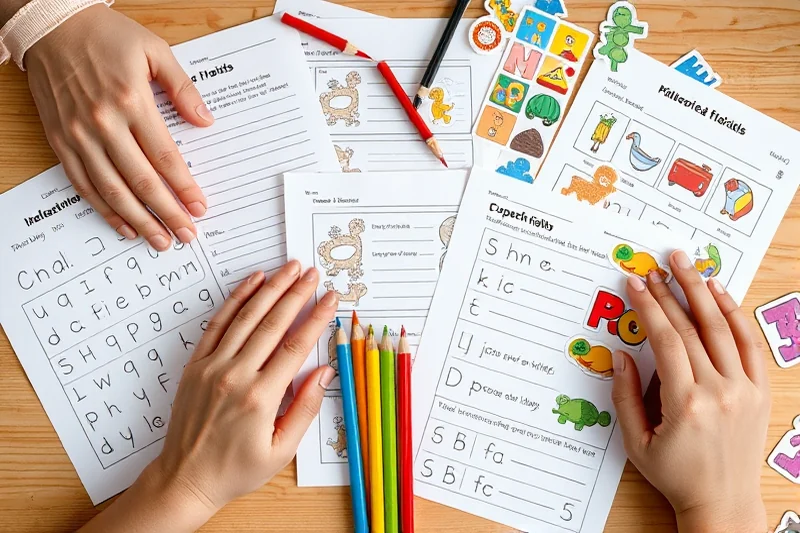
Letter building with magnetic tiles is a great way to help students understand the shapes and sounds of letters. I've used this activity with students who have difficulty with fine motor skills because the tiles are easy to manipulate and provide a lot of sensory feedback.
The tiles are magnetic, so they stick to the whiteboard or a magnetic surface, making it easy to use in the classroom. I've found that this activity is especially helpful for students who need more hands-on learning experiences. It's also a great way to teach the concept of letter formation and how letters are made up of different lines and curves.
One of the benefits of this activity is that it can be adapted for different levels of difficulty. For example, you can start with just a few letters and then gradually introduce more complex words as the students become more confident.
Word Building with Letter Tiles: A Practical Approach to Phonics
Word building with letter tiles is a practical way to help students practice forming words using letter tiles. I've used this activity with both beginning and advanced learners because it can be adjusted based on the students' needs. For example, you can start with simple two-letter words like 'at' or 'up' and gradually move to longer words like 'cat' or 'dog'.
This activity helps reinforce the connection between letters and their corresponding sounds, and it also helps students understand how to form words. I've found that it's especially helpful for students who are just beginning to learn how to read. It's also a great way to teach students how to break down words into smaller parts, which is an essential skill for reading comprehension.
One of the best things about this activity is that it's highly interactive and can be done in small groups or individually. I've seen students who were initially hesitant to participate become more confident after a few rounds of the activity.
⭐ Classic
A straightforward Alphabet Hunt with just letters and sounds.
💰 Budget
Use paper and markers to create the letters instead of buying pre-printed cards.
⚡ Extra-Fast
Use only a few letters and focus on specific sounds for a quick session.
✨ Depth
Add images or words to the letters to help reinforce meaning and context.
🥗 Light
Use a digital version of the Alphabet Hunt for a no-physical-material option.
| The mistake | Why it happens | The fix |
|---|---|---|
| Using too many letters at once | Using too many letters can overwhelm students and make the activity less effective. | Start with a small number of letters and gradually increase as students become more comfortable with the activity. |
| Not providing clear instructions | If the instructions are unclear, students may not understand the goal of the activity. | Give clear and concise instructions before starting the game, and repeat them if necessary. |
| Ignoring student participation | Some students may be hesitant to participate, which can reduce the effectiveness of the activity. | Encourage all students to participate by using positive reinforcement and making the game as inclusive as possible. |
| Focusing only on letter recognition | Focusing only on letter recognition may not help students understand the connection between letters and sounds. | Incorporate sound recognition by having students say the letter sound when they find the letter, which helps reinforce the connection between letters and sounds. |
What You'll Need tap to check off
- 1 set Alphabet cards or printed letters
- ½ cup glue (optional)
- scissors (optional)
Method tap a step when done
- Print or write out the letters of the alphabet on separate pieces of paper.
- Cut out the letters if necessary and place them around the room.
- Call out a letter sound and watch the students search for the corresponding letter.
- Repeat the process with different letters or sounds.
- Encourage students to say the letter sound when they find it.
Key Facts
Quick Phonics Activities Ideas
Common Questions
How long does the Alphabet Hunt take to set up?
What age group is the Alphabet Hunt best suited for?
Can I use the Alphabet Hunt with non-English speakers?
Is there a way to make the Alphabet Hunt more challenging for advanced learners?
References
- Exploring Phonics Instruction and Strategies in Emerging Literacy: A ... (digitalcommons.liberty.edu)
- LIFT (Literacy Interventions and Foundational Tools) Kit (doe.louisiana.gov)
- Phonics for Kindergarten - NC DPI (dpi.nc.gov)
- Phonics — Sounds and Symbols - Education and Early Development (education.alaska.gov)
- PDF Activities & Games to Support Early Literacy Skills (education.ne.gov)
Cite this guide
Blendandread (2026). Quick Phonics Activities Ideas. https://blendandread.com/quick-phonics-activities-ideas/
Feel free to cite or share this guide.