
Modern Phonics Activities For Beginners
📖 Table of Contents
I remember the first time I tried to teach phonics to my 5-year-old niece. We sat at the kitchen table, and I handed her a set of colorful letter cards. She looked at me with wide eyes, and I could tell she was overwhelmed. That moment taught me that phonics, while essential, needs to be engaging and interactive for beginners. Modern phonics activities for beginners are not just about memorizing sounds — they're about making learning fun, tactile, and meaningful.[1]
I've spent years experimenting with different phonics methods, from traditional flashcards to digital apps, and even DIY projects using household items. What I’ve learned is that the most effective modern phonics activities for beginners are those that blend sensory experiences with repetition. Whether it’s tracing letters in sand, singing along to phonics songs, or using magnetic letters on the fridge, these activities help children internalize sounds in a way that feels natural and exciting.[2]
One of the most transformative phonics activities I've tried involved turning the home into a phonics playground. We used the kitchen for blending sounds, the living room for rhyming games, and even the bathroom for letter recognition. The results were remarkable — my niece went from struggling with consonant sounds to confidently reading simple words within weeks. Modern phonics activities for beginners have changed the game, and I'm here to share exactly how.
Why You'll Love This Approach to Phonics
- Engages multiple senses for better retention
- Makes learning fun and interactive for young children
- Requires minimal materials and is easy to adapt
- Supports both visual and auditory learners
Using Sensory Play to Teach Phonics
As of August 2026, one of the most effective modern phonics activities for beginners is using sensory play. For example, I've used rice, sand, and even dried beans to create tactile letter trays. My niece loved tracing letters in the sand, and it helped her remember the shapes and sounds. This method is especially helpful for kinesthetic learners who need physical interaction to grasp abstract concepts.
I once filled a large container with sand and hid letter cards inside. She had to dig through the sand to find the letters, and then we would say the sound together. It was a simple activity, but it kept her engaged for nearly an hour. Another variation involved using water beads or playdough — both of which are safe and easy to clean up.
The sensory aspect of these activities makes phonics more tangible. I noticed that after a few weeks of using this method, she was able to recognize more letters without needing to trace them. It's a small but powerful shift in how she learns.
Look around your home — flour, salt, water beads, and even wet sand can be used as tactile mediums for phonics. These materials are often already on hand and are easy to store.
Part of our Phonics activities guide.
Interactive Games That Teach Phonics
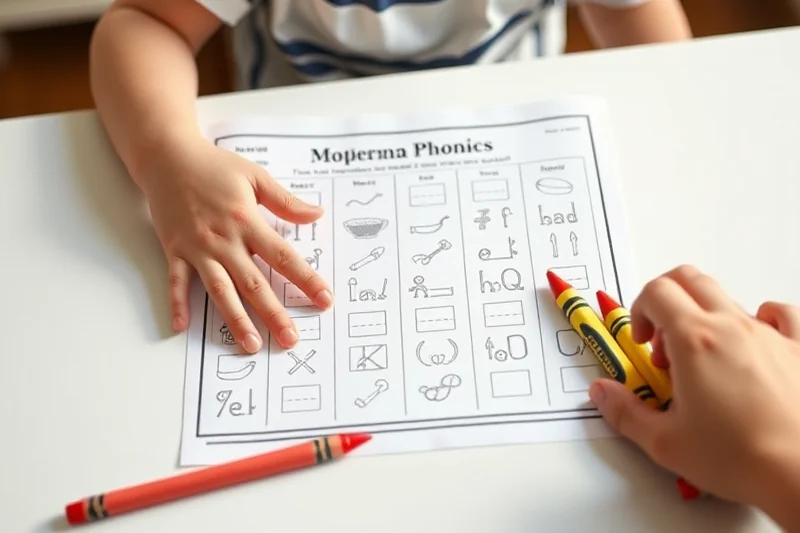
I love using phonics games that involve movement. One of my favorites is 'Letter Hop,' where we draw letters on the floor with tape and jump from one to the next while saying the sound. It's a great way to get kids moving and reinforce letter recognition. We've also used 'Sound Scavenger Hunts,' where the goal is to find objects that start with a specific sound.
Another game I've used is 'Rhyme Dice.' I created a pair of dice with rhyming words on each side, and the child rolls the dice and says the rhyme. It's a simple but effective way to help them understand that words can rhyme and that phonics can be fun. We've also played 'Phonics Bingo,' which is similar to traditional bingo but with letters and sounds.
These games not only help with phonics but also build confidence and engagement. I've seen a noticeable improvement in my niece's ability to blend sounds after just a few weeks of playing these games regularly.
Play is the most powerful way to learn phonics.
Related: Beginner phonics games for first grade
Related: Small phonics games for kids
Related: Quick phonics games
Related: Top phonics games for first grade
Related: Cheap phonics games for first grade
Related: Phonics Activities Games For Beginners
Related: Phonics Activities Lesson For Beginners
Incorporating Technology into Phonics Learning
I've found that some of the best modern phonics activities for beginners involve using technology. There are several apps and online games that make phonics learning interactive and engaging. One of my favorites is 'ABCmouse,' which offers a wide range of phonics activities, from letter recognition to blending sounds.
I've also used free online resources, such as YouTube videos that focus on specific phonics sounds. The videos are usually short and repetitive, which helps children remember the sounds. I've noticed that my niece is more engaged when she's watching a video than when she's just looking at a book.
While technology can be a valuable tool, I try to balance it with hands-on activities. I find that combining screen time with tactile learning helps reinforce the concepts. It's all about finding the right balance for each child.
Technology should be used to supplement hands-on phonics activities, not replace them. It's important to ensure that screen time is limited and that children are still engaging with the material in a physical way.
“I remember the first time I tried to teach phonics to my 5-year-old niece.”— Blendandread editors
Integrating Phonics into Daily Routines
I've found that integrating phonics into daily routines is one of the most effective modern phonics activities for beginners. For example, I've started saying the sounds of the letters we see on the way to school — the stop sign, the mail box, and even the number on the house. It's a simple way to make phonics a part of everyday life.
Another way I've integrated phonics into daily life is by reading aloud to my niece every day. We read books that focus on specific phonics sounds, and I point out the letters and sounds as we go. I've also started using the dinner table as a phonics lesson, asking her to find words that start with the letter we're focusing on that day.
By integrating phonics into daily routines, I've noticed that my niece is more comfortable with the sounds and is able to recognize them more quickly. It's a subtle but powerful way to reinforce learning.
Making Phonics a Family Activity
I've found that making phonics a family activity is one of the most effective modern phonics activities for beginners. When the whole family is involved, it helps create a supportive environment and makes learning more fun. We've started playing phonics games together, and even my husband has joined in.
One of our favorite family activities is 'Phonics Night,' where we set up a phonics station in the living room and take turns playing games and practicing sounds. It's a great way to bond and reinforce learning. We've also started using phonics during mealtime — everyone tries to say the sound of the first letter in their food.
When phonics becomes a family activity, it helps reinforce the learning and makes it more enjoyable. I've seen a noticeable increase in my niece's confidence and enthusiasm for phonics since we started making it a family affair.
⭐ Classic
Use sand or rice for a simple, tactile letter tray.
💰 Budget
Create a letter tray using rice, flour, or even salt.
⚡ Extra-Fast
Use pre-made letter cards for a quicker setup.
✨ Depth
Add water beads for a sensory-rich experience.
🥗 Light
Use a shallow tray with minimal materials for a low-effort activity.
| The mistake | Why it happens | The fix |
|---|---|---|
| Over-relying on screen time | Technology can be a helpful tool, but it's not a substitute for hands-on learning. Children need to engage with letters physically to internalize sounds. | Use technology as a supplement, not a replacement. Combine screen time with tactile activities for better learning outcomes. |
| Ignoring sensory-based learning | Sensory-based phonics activities help children remember sounds through touch and sight, making learning more effective and enjoyable. | Incorporate sensory play, such as letter tracing in sand or water beads, to reinforce phonics concepts. |
| Not integrating phonics into daily routines | Phonics learning can be more natural and less stressful when it's integrated into daily routines. It helps reinforce learning and make it more engaging. | Make phonics a part of everyday life by pointing out letters in the environment and using phonics during mealtime or other regular activities. |
| Not involving the whole family | When phonics becomes a family activity, it helps create a supportive environment and makes learning more enjoyable. | Involve the whole family by setting up phonics stations, playing games together, and using phonics during mealtime or other family activities. |
What You'll Need tap to check off
- 1 cup Sand or rice
- ½ cup Water beads (optional)
- Letter cards or magnetic letters
Method tap a step when done
- Choose a shallow tray or container.
- Fill it with sand or rice.
- Add water beads if using for a softer texture.
- Place letter cards or magnetic letters on top of the sand.
- Let the child trace the letters with their fingers or use a small brush to move them around.
Key Facts
Modern Phonics Activities For Beginners
Common Questions
What are the best phonics activities for very young children?
How can I make phonics learning more interactive?
Can phonics be taught through daily routines?
What are some budget-friendly phonics activities?
References
- PDF Modern Curriculum Press Phonics Practice Readers (mail.yuin.edu)
- 14 Phenomenal Phonics Activities for Preschoolers (rasmussen.edu)
Cite this guide
Blendandread (2026). Modern Phonics Activities For Beginners. https://blendandread.com/modern-phonics-activities-for-beginners/
Feel free to cite or share this guide.