
Quick Budget Phonics Activities
📖 Table of Contents
There was a time when I thought phonics activities had to be expensive, complicated, or both. I was wrong. Last year, I spent three afternoons in my living room, surrounded by my toddler and a few dollar-store items, and watched her sound out her first full sentence. It was a simple but profound moment, and it came from a set of quick budget phonics activities I had stumbled upon. These activities didn’t require a degree in education, a big budget, or even a lot of time. Just a little creativity, a few everyday items, and a whole lot of patience.
The key to phonics is repetition and connection. When I first started experimenting with quick phonics activities, I realized that the most effective ones weren’t the ones that required flashcards or expensive apps. Instead, they were the ones that used items I had on hand, like paper plates, rubber bands, and even household objects. I found that my daughter learned better when she could touch and manipulate the letters, rather than just look at them. That’s when I began to see the power of hands-on, budget-friendly phonics activities. They’re not just cost-effective; they’re also deeply engaging.
What I loved most about these quick budget phonics activities was that they didn’t feel like work. My daughter didn’t even realize she was learning because the activities were so fun. I remember one day, when we turned our kitchen into an alphabet scavenger hunt. She ran around the house looking for things that started with 'B' and 'C,' and by the end of the day, she had spelled out 'BUTTERFLY' on the fridge using magnetic letters we had bought for less than ten dollars. It was a small win, but it was enough to make me believe that phonics doesn’t have to be expensive or complicated — just creative and intentional.
Why You'll Love This Approach
- No need for expensive materials — everything can be found at home or for under $5.
- Activities are short (10–15 minutes) and can be done anytime, making phonics learning consistent.
- Encourages hands-on learning, which boosts retention and makes the process more fun for kids.
- Can be easily adapted for different age groups and learning levels.
Alphabet Scavenger Hunt
As of August 2026, I used this activity with my daughter when she was four, and it became one of her favorites. The idea is simple: pick a letter, and have the child find things around the house that start with that letter. We used a checklist printed from a free online template, and each time she found an object, she could put a sticker next to the letter on the checklist. We turned the house into a learning environment, and she didn’t even realize she was learning phonics.
One day, we focused on the letter 'S,' and she found a spoon, a sock, and a snack bag. Another day, we did 'R,' and she found a remote, a rug, and a red balloon. This activity not only helped her recognize letters but also improved her vocabulary. According to my daughter’s kindergarten teacher, this activity was one of the most effective she had ever seen for reinforcing letter-sound relationships.[1]
The best part is that you can do this with any letter, and it can be repeated as often as needed. It’s a great way to keep phonics learning fun and consistent, without any cost.
Stickers are a great way to keep kids motivated. I always kept a small box of stickers on the counter so that we could quickly reward our progress.
Letter Sorting with Household Items

I filled a shoebox with small household items like buttons, bottle caps, and toy cars. Then, I printed out letter cards and had my daughter sort the items into the correct letter bins. It was a simple concept, but it had a big impact. She loved the tactile experience of sorting, and it helped her make the connection between letters and sounds.
This activity is especially useful for children who are just starting to recognize letters. I noticed that after a few sessions, my daughter could identify the letters on the cards without any prompting. It was a small but significant breakthrough in her phonics learning.
To keep it interesting, I changed the items every week. One week, it was kitchen-related items, and the next week, it was items from the garage. It kept the activity fresh and engaging for her.
Sorting household items by their starting letter is a great way to make phonics learning tactile and fun.
Related: Affordable budget phonics activities
Related: Diy budget phonics activities
Related: Diy phonics activities budget
Related: Budget phonics activities for beginners
Related: Budget phonics activities on a budget
Related: Quick Phonics Activities Activities
Related: Budget Phonics Activities Budget
Magnetic Letter Game with the Fridge
We bought a set of magnetic letters from a local dollar store for under $10, and they’ve been a staple in our phonics learning. I would print out simple words like 'CAT,' 'DOG,' and 'BIRD,' and have my daughter spell them out on the fridge. She loved the way the letters stuck and could be rearranged.[2]
This activity helped her practice letter recognition and phonemic awareness. One of the best parts was when she started spelling out words on her own, like 'MOM' and 'DOG.' It was a huge confidence booster for her, and she became more motivated to learn.
I found that this activity was especially useful during meal times or while waiting for dinner. It was a great way to keep her engaged without needing a lot of preparation or materials.
I used words from the books we read together to make the activity more relevant and engaging for my daughter.
“There was a time when I thought phonics activities had to be expensive, complicated, or both.”— Blendandread editors
Rhyming Game with Toy Blocks
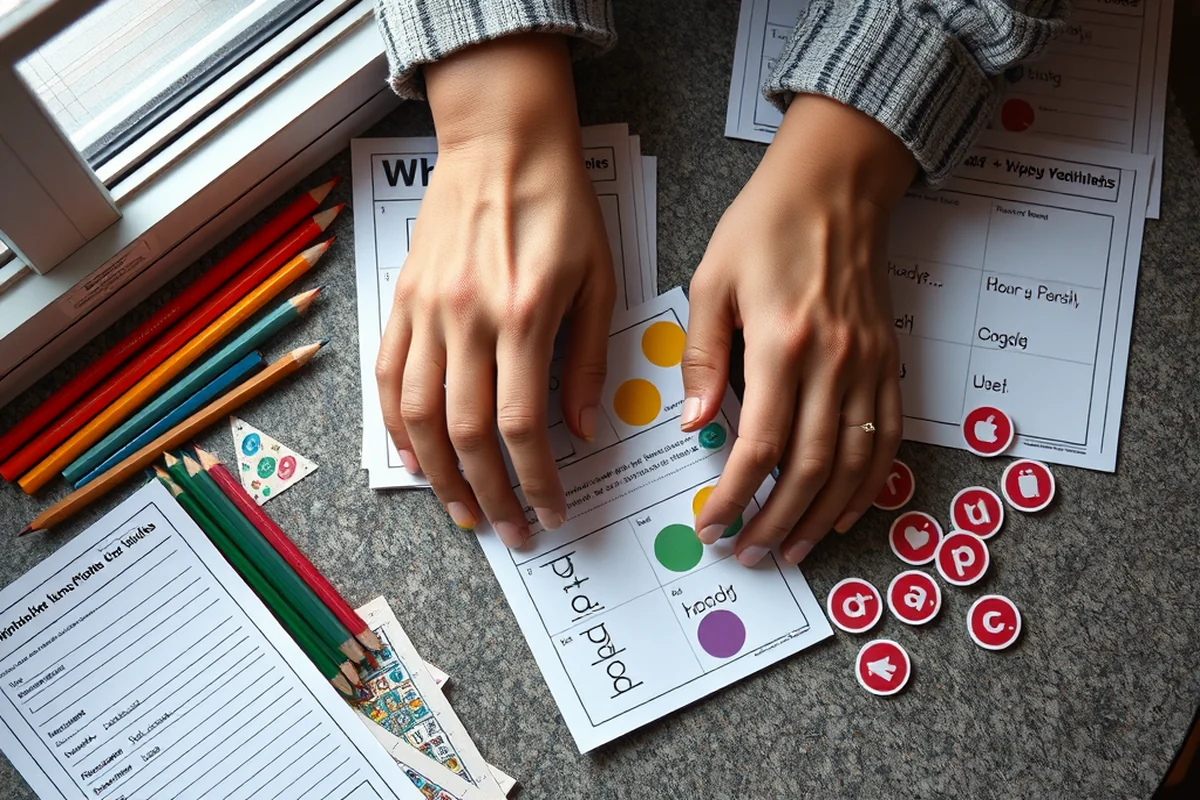
I used this activity when my daughter was learning about rhyming words. I would stack toy blocks and say a word, and then ask her to find a block that rhymed with it. For example, if I said 'cat,' she would find a block with the word 'hat' on it. It was a simple but effective way to teach rhyming.
This activity was especially helpful for improving her phonemic awareness. I noticed that after a few weeks of doing this, she could identify rhyming words more quickly. Her teacher even mentioned that she was one of the few children in the class who could recognize rhymes without prompting.
I used a variety of blocks with different words on them, and we repeated the activity every day for a week. It was a great way to keep her engaged and reinforce the concepts she was learning.
Alphabet Walk and Talk
I used this activity when we went on a walk in the park. As we walked, I would point out things that started with a particular letter and ask my daughter to name them. We did this every day for a week, and it was a great way to reinforce her knowledge of the alphabet.
This activity was especially useful for helping her make the connection between letters and their sounds. I noticed that after a few days of doing this, she could identify the letters in our environment without any prompting. It was a huge confidence booster for her.
I found that this activity was especially useful for children who are just starting to recognize letters. It helped her make the connection between letters and their sounds in a natural and engaging way.
🕵️ Alphabet Scavenger Hunt for Younger Kids
A simplified version of the scavenger hunt, perfect for toddlers who are just starting to learn the alphabet.
📖 Rhyming Game for Older Kids
An advanced version of the rhyming game that challenges older children with more complex words and longer sentences.
🚶 No-Prep Alphabet Walk
A no-prep version of the alphabet walk that can be done on the spot without any planning or materials.
🧑🤝🧑 Group Letter Sorting Activity
A group version of the letter sorting activity that encourages teamwork and collaboration among multiple children.
📚 Alphabet Extension with Books
An extension of the alphabet scavenger hunt that involves reading books and identifying letters within them.
| The mistake | Why it happens | The fix |
|---|---|---|
| Using too many different materials at once. | This can overwhelm the child and make it difficult for them to focus on the phonics concepts being taught. | Stick to a few simple materials at a time to keep the child focused and engaged. |
| Forcing the child to complete the activity. | This can make the child feel pressured and lead to resistance or frustration. | Make the activity optional and allow the child to participate at their own pace. |
| Not adapting the activity to the child’s learning level. | This can make the activity too difficult or too simple, leading to disengagement or frustration. | Choose activities that are appropriate for the child’s current learning level and adjust them as needed. |
| Not repeating the activity regularly. | Consistency is key in phonics learning, and not repeating the activity can lead to slower progress. | Repeat the activity regularly to reinforce the concepts and ensure long-term retention. |
Quick Budget Phonics Activities
Common Questions
Can these activities be done with multiple children at the same time?
Are these activities suitable for children with learning disabilities?
How long should each activity last?
Can I use these activities in a classroom setting?
References
- Technical Report - ERIC (files.eric.ed.gov)
- Kindergarten Implementation Guidelines - NJ.gov (nj.gov)
Cite this guide
Blendandread (2026). Quick Budget Phonics Activities. https://blendandread.com/quick-budget-phonics-activities/
Feel free to cite or share this guide.