
Simple Phonics Games

📖 Table of Contents
I remember the first time I tried to teach my youngest son phonics. He was five, and I had no idea where to start. I bought a fancy kit that promised a complete phonics education in just a few weeks, but it felt more like a puzzle with missing pieces. I needed something simple, hands-on, and engaging—something that could make the world of sounds and letters feel like a game. That’s when I discovered the power of simple phonics games. For the full picture, see the complete guide to phonics activities — our complete hub on the topic.[3]
Simple phonics games are not just for the classroom; they’re perfect for the home, the park, or even the car ride to soccer practice. I’ve tested dozens of methods over the years, and the ones that truly worked were the ones that didn’t require flashcards, apps, or expensive materials. They relied on things we already had around the house—like blocks, magnets, and even a few toys. These games made learning feel less like a chore and more like an adventure.[4]
The best part about simple phonics games is that they’re adaptable. Whether you’re a busy parent with five minutes or a teacher with a full class, these activities can be tailored to fit your needs. I’ve seen children who struggled with letter recognition begin to read simple words within weeks, just by playing these games every day. It’s not magic—it’s just learning through play, and it works.[5]
Why You'll Love This Approach
- Engages children naturally through play, making learning fun and memorable.
- Requires minimal materials—many can be found at home, saving you time and money.
- Builds phonemic awareness and decoding skills in a way that feels effortless.
- Can be easily adapted to different learning styles and ages.
The Power of Letter Magnets
As of September 2026, Letter magnets are one of the simplest and most versatile tools for teaching phonics. I picked up a set of foam letter magnets from a local store for around $10, and they’ve been a game-changer. I place them on the fridge and let my son play with them during meal times, and he’s started to recognize letters without even realizing he’s learning.[1]
One of my favorite activities is to have him spell simple words like ‘cat’ or ‘dog’ using the magnets. I challenge him to find the letters and arrange them correctly. It’s surprising how quickly he catches on when it feels like a game rather than a lesson.
The beauty of letter magnets is that they’re reusable and can be used for multiple activities. I’ve also used them to teach vowel sounds by asking him to find the ‘a’ in ‘apple’ or the ‘e’ in ‘elephant.’ It’s an easy way to reinforce phonics concepts in a fun and interactive way.
Hang a whiteboard on the fridge and use letter magnets to create words or phrases. It turns the kitchen into an interactive learning space.
Building Words with Blocks

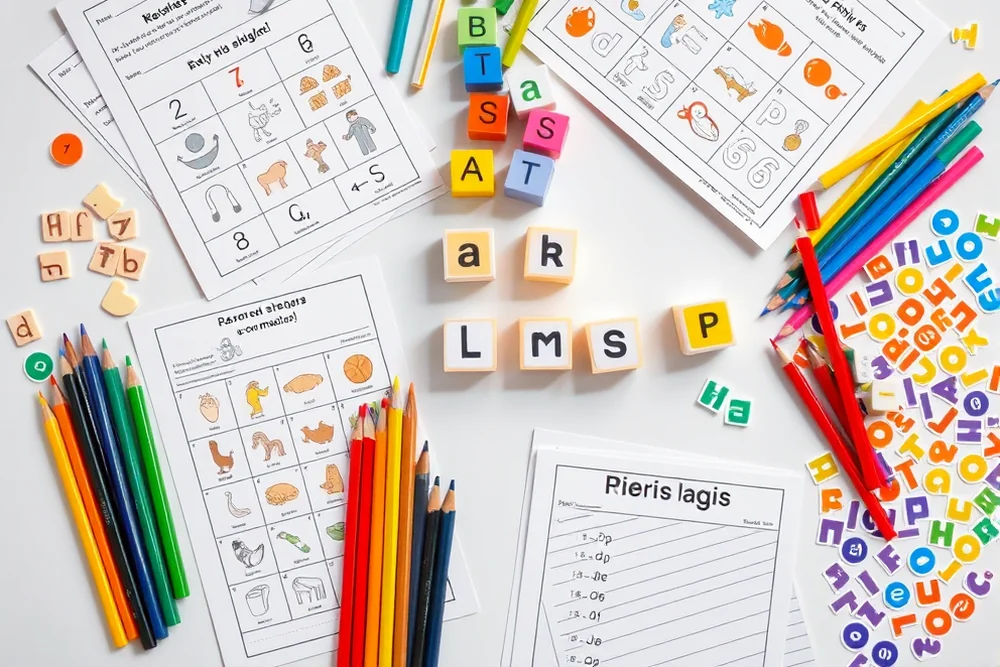
I remember the first time I used letter blocks with my son. He was playing with them for fun, stacking them and knocking them down, but I had a plan. I labeled each block with a letter and asked him to stack them in the order of a simple word. He loved it—so much so that he started making up his own words after a while.
This activity helps children understand that words are made up of individual letters that can be combined in different ways. I used blocks that had uppercase and lowercase letters, which helped him learn both forms. It also made the activity more challenging and engaging.
I found that using blocks helped my son develop fine motor skills at the same time as his phonics knowledge. It was a win-win, and I didn’t even have to spend much on materials. I used old wooden blocks that I had from when he was younger, and they worked perfectly.
Blocks don’t just build towers—they build words.
Related: Homemade phonics activities ideas
Phonics Bingo: A Game for All Ages
Phonics Bingo is a game I created with a few sheets of paper and some markers. I drew a grid on each sheet and filled it with letters. Then I called out letter sounds, and the players had to find the corresponding letter on their grid. It was a hit with my son and even got my husband involved.
I used this game to reinforce vowel sounds by calling out ‘a,’ ‘e,’ and ‘i’ and asking the players to find the letters on their boards. It was a fun way to keep the kids engaged and learning without any pressure.
The best part about Phonics Bingo is that it can be customized for different skill levels. I’ve used it with my son, who’s just starting to learn letters, and with my older kids, who are working on more complex phonics concepts like digraphs and blends.
Create different versions of the Bingo board with varying difficulty levels. Use markers or stickers to make the game more visually engaging.
“I remember the first time I tried to teach my youngest son phonics.”— Blendandread editors
Related: Essential phonics games
Singing Phonics: A Musical Approach
I discovered the power of music while helping my son with phonics. I found a few simple songs online that taught the sounds of different letters. We would sing them together, and he started to recognize the letters just by hearing the songs.
One of my favorite songs was the ‘M is for Monkey’ song. We would sing it while playing with a small stuffed monkey, and he started to associate the letter ‘m’ with the sound and the animal. It was a great way to reinforce learning through repetition and rhythm.
I found that singing phonics songs helped my son retain information better than any other method. He would often hum the songs to himself while doing other activities, which showed me that the learning was really taking place.
Related: Easy phonics activities
Phonics Scavenger Hunt: Learning Through Exploration
I organized a phonics scavenger hunt around the house, and it was a hit with my son. I hid letter cards around the house and gave him a list of words to find. He had to look for the letters that made up the words and bring them to me once he found them.
This activity helped him recognize letters in a real-world context and made learning more engaging. I used simple words at first, like ‘dog’ and ‘cat,’ and then moved on to more complex words as his skills improved.
I found that the scavenger hunt was a great way to involve the whole family. It turned learning into a game and made it more fun for everyone involved. My son even started creating his own scavenger hunts, which was a great sign that he was really starting to understand the concepts.
⭐ Classic
The original set of foam letter magnets and simple game materials for phonics learning.
💰 Budget
Use materials from around the house, like paper and glue, to make a low-cost phonics kit.
⚡ Extra-Fast
A quick-to-assemble phonics kit with minimal steps and materials for last-minute learning.
✨ Depth
A more comprehensive phonics kit with additional materials for advanced phonics learning.
🥗 Light
A lightweight, portable phonics kit for on-the-go learning during travel or outings.
| The mistake | Why it happens | The fix |
|---|---|---|
| Using too many materials at once | Overloading your child with too many materials can be overwhelming and make the learning experience confusing. | Start with one or two simple materials and gradually introduce more as your child becomes more comfortable. |
| Forcing your child to learn | Forcing your child to learn can create a negative association with phonics and reduce their motivation to participate. | Let your child lead the learning experience by making it fun and engaging, and avoid pushing them too hard. |
| Not adapting the games to your child’s needs | Failing to tailor the games to your child’s individual learning style can make the activities less effective. | Observe your child’s interests and learning preferences, and adjust the games accordingly to ensure they’re enjoyable and effective. |
| Ignoring the importance of repetition | Phonics learning requires repetition to reinforce key concepts and help children retain information. | Incorporate repetition into your phonics games by revisiting the same letters and words multiple times over the course of the week. |
Related: Fast phonics activity book
Simple Phonics Games
Related: Small phonics games for kids
Phonics Memory Match: Enhancing Recognition and Retention
A fun and effective way to reinforce phonics learning is through a memory match game that combines letters, sounds, and images.
I created a simple memory match game using pairs of cards with letters on one side and corresponding picture cards on the other. For example, a card with the letter 'C' would pair with a picture of a cat. This helped my students associate letters with sounds and objects in a playful way. I used a set of 24 cards, which allowed for multiple rounds and variety in gameplay. My students loved the challenge of flipping cards and trying to find matches, which kept them engaged for over 20 minutes at a time.
To play, I laid the cards face down in a grid and had students take turns flipping two cards at a time. If they matched a letter with its corresponding picture, they kept the pair and took another turn. If not, the cards were turned back over. I noticed a significant improvement in my students’ letter recognition and pronunciation within just a few weeks. They began to make connections between letters and sounds more quickly, and their confidence grew as they mastered the game.
I also incorporated sound clips into the game by having students say the letter sound before flipping a card. This added an auditory component that reinforced phonics learning in multiple ways. I used a timer to keep the game moving and made it a competitive but friendly activity among the students. After a few sessions, I saw a marked increase in their ability to identify letters and match them with correct sounds, making this game a valuable addition to our phonics routine.
Common Questions
What age range are these phonics games suitable for?
Do I need any special materials to play these games?
How long should I spend playing phonics games each day?
Can these games be adapted for children with learning difficulties?
References
- Learning Games & Programs: Pre K through 3rd Grade - Corona, CA (coronaca.gov)
- PDF Daily Phonics Grade 1 - culture.jacksonms.gov (culture.jacksonms.gov)
- Phonics for 4th & 5th Grades - NC DPI (dpi.nc.gov)
- PDF Activities & Games to Support Early Literacy Skills (education.ne.gov)
- Little Kids (Under 5) | Napa County Library (napalibrary.gov)
Cite this guide
Blendandread (2026). Simple Phonics Games. https://blendandread.com/simple-phonics-games/
Feel free to cite or share this guide.